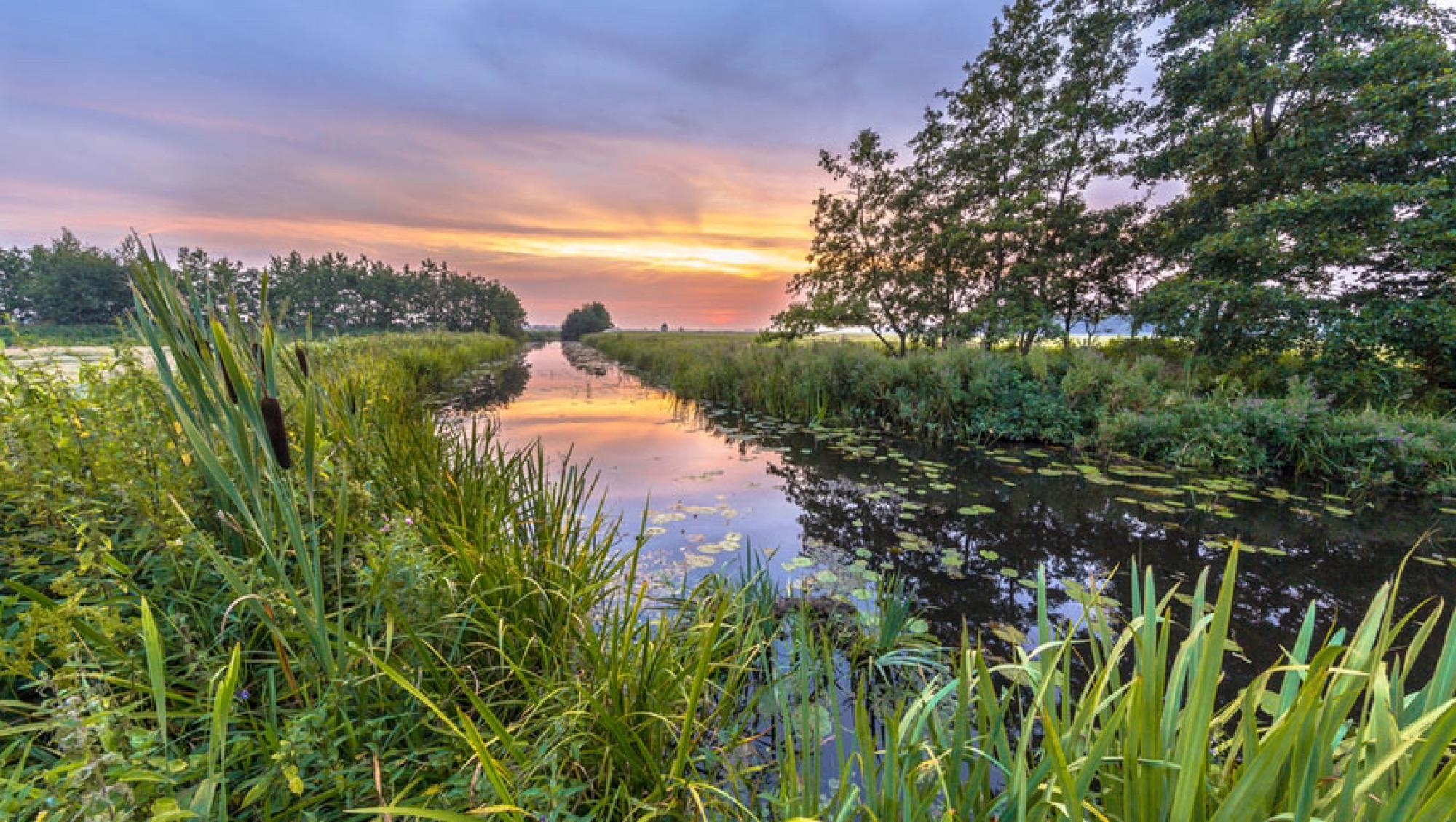
In the bend, you pass the Koningsdiep. The Koningsdiep is a small river meandering through south-eastern Friesland. In the Middle Ages, it was a meandering waterbed that flowed into the old Middelzee. The area of the stream valley teems with interesting cultural-historical traces; there is a great wealth of finds from the hunter-gatherer period, especially from the Old Stone Age (Palaeolithic) and Middle Stone Age (Mesolithic). Over the centuries, the river with its stream valley has left unique features in the landscape with fields, meadows, fens, marshes, heaths and forests. On the sand ridges of the river, villages such as Bakkeveen, Wijnjewoude and Beetsterzwaag, and estates arose. Along the river, settlements of peat-colonial towns emerged (Nij Beets, Gorredijk). Despite drastic changes as a result of land consolidation, the Koningsdiep brook valley still shows much of how the area has developed over the centuries. Not only the peat reclamations have been of great significance, the increasing wealth of a handful of large landowners has also largely determined the character of the region. From around the 18th century onwards, around 80 per cent of the middle area of the Koningsdiep was owned by just seven wealthy families. These empires left their mark on the area; the result is the many estates and wooded areas.